The Freedom Theatre Production (2019)
Written by: Mélanie Dahl
Directed by: Ahmed Tobasi
Puppets by: Nidal Khateeb
Artistic Preparation: Fidaa Zidan
Performed by: Arwa Hleihl, Majde Nazzal, Munther Bannourah
Scenography: Ahmed Matahen
Lighting: Adnan Naghnaghia
Sound Engineering: Sami Al-Sadi
Poster Design & Photography: Mohammed Moawia
Producer: Mustafa Sheta
About the Play
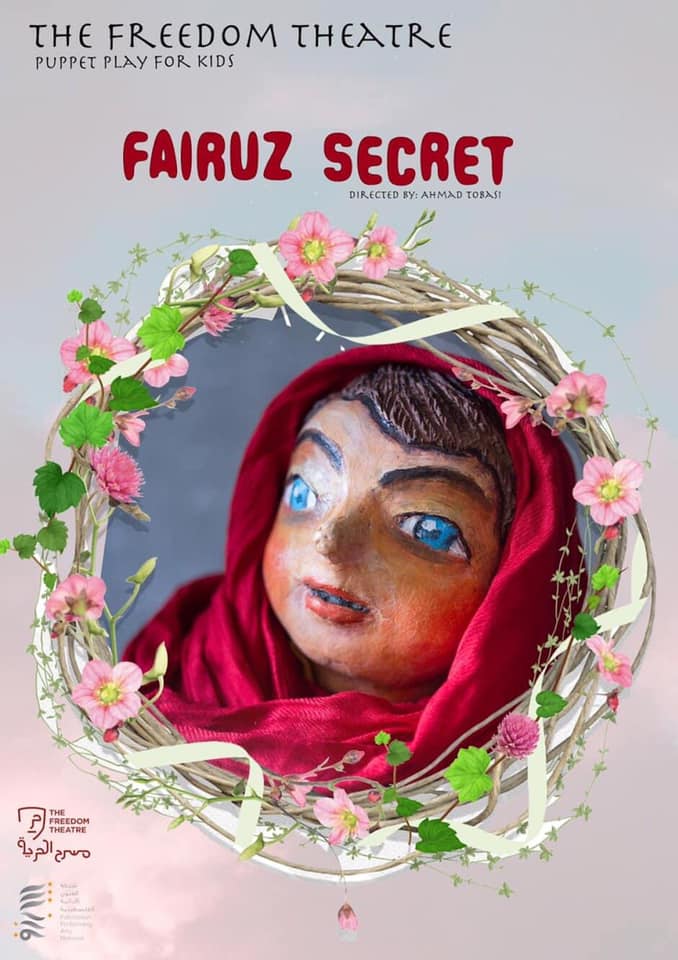
Fairuz’ Secret is a heartwarming puppet theatre production for children, blending humour, imagination, and emotional storytelling. The play follows Fairuz, a young girl preparing a special Mother’s Day gift that she insists on keeping secret. But her mischievous neighbour Karkour is determined to expose her surprise, leading to a lively adventure filled with tension, laughter, and lessons about kindness, perseverance, and trust.
Through carefully crafted puppets and gentle narrative rhythm, the show explores how children navigate emotions like pride, anxiety, and the fear of having a special moment ruined. It encourages young audiences to value generosity, protect meaningful gestures, and solve problems with creativity.
Origins and Development
The idea for Fairuz’ Secret was conceived in 2013 in Norway, after The Freedom Theatre graduate Ahmed Tobasi and theatre artist Mélanie Dahl collected stories from children in Tulkarem.
These stories were transformed into a puppet performance first shown in Norway in 2014.
In 2019, after Tobasi returned to The Freedom Theatre, the creative team redeveloped the concept into a full-scale production for Palestinian audiences. The project brought together Palestinian artists from the West Bank and from inside 48, making it a unique cross-community artistic collaboration.
Artistic Approach
- Handcrafted puppets by Nida Al-Khatib, designed with warmth and detail to reflect children’s emotional worlds.
- Dynamic visual storytelling, ideal for young audiences and family settings.
- A narrative focused on empathy, secrets, friendship, and the power of small acts of love.
- A mobile production, adaptable for schools, theatres, cultural centres, and festivals.
Performance History
Since its launch at The Freedom Theatre in August 2019, the production has toured widely across the West Bank, performing in:
- Schools
- Community centres
- Children’s festivals
- Local cultural institutions
In December 2019, Fairuz’ Secret represented Palestine at the 34th Neapolis International Festival for Kids Theatre in Tunisia — a major milestone highlighting its artistic and cultural value.
Themes
- Family bonds and Mother’s Day traditions
- Emotional expression and trust
- Friendship and conflict
- Imagination through puppet theatre
- Moral lessons delivered in a playful, accessible form
Target Audience
Children aged 4–10, families, schools, and community centres.
Duration
Approx. 35 minutes.